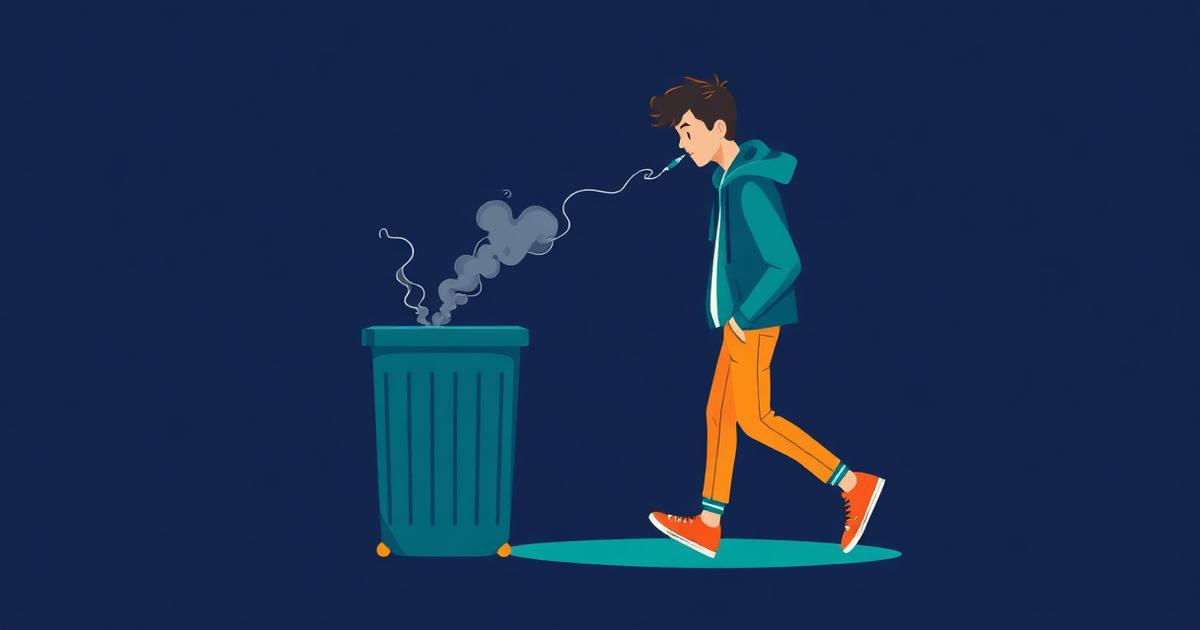

If you have just found a device or figured out your teen is vaping, the most important thing you can do in the next hour is nothing. Not a raid, not a lecture, not an ultimatum. The conversation you have next week matters more than the reaction you have tonight, and the evidence on family interventions is clear on which one moves the needle.
First: what the research actually shows
Meta-analyses of adolescent substance use interventions consistently find:
- Ultimatums and punishment reduce disclosure. They do not reduce use, they hide it.
- Warm, involved parenting predicts better quit outcomes than authoritarian parenting.
- Access to a non-parent adult (pediatrician, school counsellor, coach) roughly doubles the odds of a teen actually engaging with cessation support.
This is not permissive parenting advice. It is what the trials show.
Spotting the signs
Modern vape devices are small and low-odour, so the signals are often indirect:
- Sweet, fruity, or dessert-like smells on clothes, in bedrooms, or in cars
- Small USB-shaped devices, pods, disposable "sticks," or unfamiliar chargers
- Increased water intake, dry mouth, mouth ulcers, or dry cough
- Unusual spending: Venmo, Cash App, gas-station purchases, small Amazon orders
- Sudden irritability that eases when the teen goes to their room or bathroom (nicotine withdrawal cycle)
- Nose bleeds from the PG irritant
Any one of these is unreliable on its own. A pattern of several is worth a calm conversation.
The conversation, step by step
- Get calm first. If you found a device this morning, wait until evening or the next day. Being visibly angry closes the door.
- Pick a low-stakes moment. Driving somewhere is often the best setting, no eye contact, no exit.
- Ask more than you tell. "When did you start?" "What does it do for you?" "How much are you using?" You are gathering data, not prosecuting.
- Name the addiction, not the person. "Nicotine is designed to be hard to stop" beats "you are addicted."
- Offer resources, not verdicts. Mention This Is Quitting (text DITCHVAPE to 88709), offer to book a pediatrician appointment, ask what would help.
- Agree one next step. Not a plan for the whole quit — one concrete thing that happens this week.
Free resources built for teens
- This Is Quitting (text DITCHVAPE to 88709). Free, anonymous, teen-specific SMS coaching. There is a parent-side companion: text QUIT to 88709.
- Your state quitline (1-800-QUIT-NOW). Some states have specific adolescent programmes.
- Pediatrician visit. A private appointment gives your teen space to talk about the addiction and to consider NRT or medication if appropriate.
- School counsellor. Confidential in most US states.
Our teen quit pillar is the version of the story written for the teen themselves; sharing that link is often less confronting than saying it out loud.
What backfires
- Ultimatums. "One more time and…" tends to produce hiding, not stopping.
- Reading their messages. Kills disclosure permanently.
- Punishing a slip. Slips are part of every quit attempt at every age. Punishing them ensures the next slip is hidden, which is when a slip becomes a full relapse.
- Making it about your feelings. Your worry is real, but leading with it puts your teen in the role of caretaker.
Supporting the quit
Once your teen has decided to try quitting, small logistics matter:
- Keep the house nicotine-free (no visitors vaping, no leftover devices).
- Do not push for daily updates. Weekly is plenty.
- Notice week two, when withdrawal has eased and no one is congratulating them any more.
- If they slip, ask what they learned, not why they did it.
When to escalate
Book a clinician appointment if:
- Withdrawal symptoms are affecting school, sleep, or mood for more than two weeks
- Multiple quit attempts have failed inside a month
- There is any concern about anxiety, low mood, or self-harm alongside quitting
- You suspect other substance use is involved
The parent version of the five-minute rule
When your teen slips, you also have a five-minute window: the first five minutes of your reaction is what they will remember. Take the five minutes. Then react.
If you want a shared craving log or streak, PuffPause works for teens with parent visibility as a supported adjunct to This Is Quitting or a clinician plan — but the app is not a substitute for the conversation.