Vaping is addictive for the same core reason smoking is, nicotine, and then for a second set of reasons that make many vapers more dependent than they would have been as smokers. Understanding the mechanism is not just academic. It changes how you plan to quit.
Mechanism 1: nicotine, the brain, and dopamine
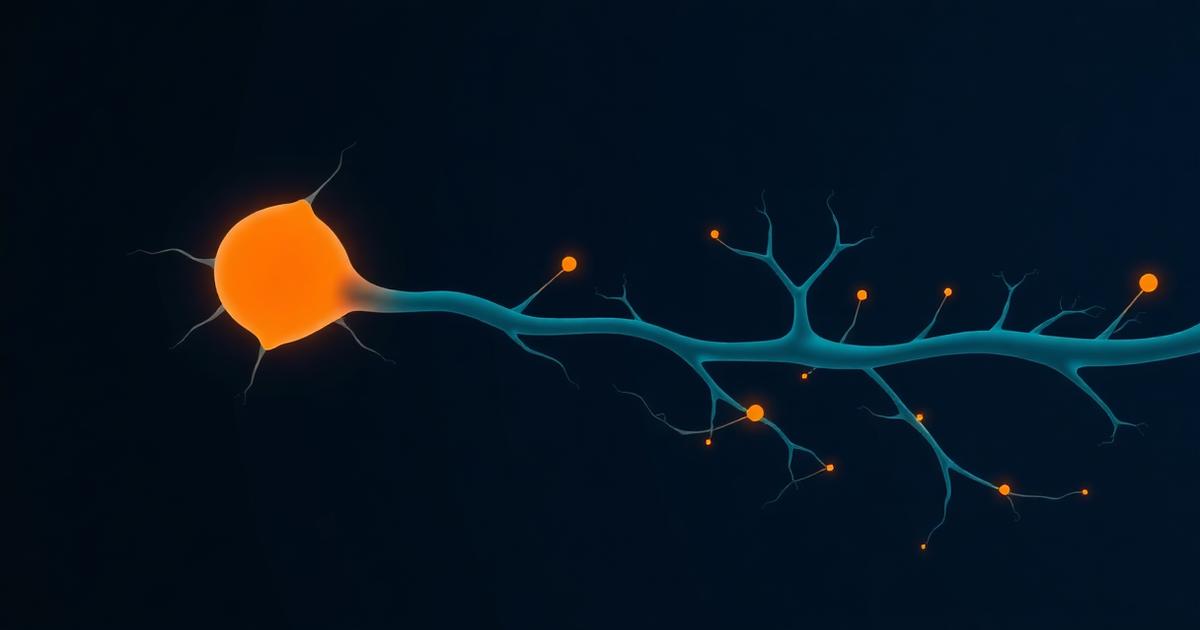
Inhaled nicotine reaches the brain within about ten to twenty seconds of a puff. Once there, it binds to nicotinic acetylcholine receptors and triggers a rapid release of dopamine in the mesolimbic reward pathway, the same circuit involved in food, sex, and other habit-forming rewards.
Dopamine is not simply "the pleasure chemical". It is the brain's teaching signal: dopamine at time T tells the brain, "whatever I was just doing, do it again". Fast, reliable dopamine hits are the strongest possible reinforcement schedule. That is why nicotine dependence forms quickly.
With repeated exposure, the brain upregulates nicotinic receptors, it grows more of them, so that baseline function comes to depend on nicotine being present. Its absence produces the discomfort of withdrawal: irritability, anxiety, poor concentration, restlessness. Taking another puff resolves the discomfort within seconds, which is another round of reinforcement.
Mechanism 2: nicotine salts changed the dose
Before roughly 2015, most e-liquids used freebase nicotine, which is alkaline and harsh at high concentrations. That harshness was a natural cap: you physically could not comfortably inhale very much per puff.
Nicotine-salt e-liquids, popularised by devices like Juul, use a modified form of nicotine that is far less alkaline. It is much smoother at high concentrations, so a single puff can deliver a large nicotine dose comfortably. A widely cited comparison: a single 5% nicotine-salt pod can deliver roughly the nicotine content of a pack of cigarettes.
The chemical is nicotine. The delivery has been engineered to be more efficient than a cigarette.
Mechanism 3: dose frequency
A cigarette takes several minutes, produces smoke, smells, and requires a lighter and (usually) a doorway. Those are frictions. They limited how often smokers dosed themselves.
Vaping has almost none of that friction. A puff is a second, indoors, silent, invisible. The result is a schedule of hundreds of small doses per day. From a habit-learning perspective this is close to the worst case: rapid, frequent, reliable reinforcement paired with an ever-present cue (the device in your pocket).
Mechanism 4: rituals and cues
Every puff is also a ritual, a specific hand movement, a specific breathing pattern, a specific taste. Those sensory cues get paired with nicotine's dopamine hit thousands of times. After a while the cues alone start producing the urge, even without nicotine present. This is why nicotine-free vaping can still feel compulsive, and why cravings months after quitting can be triggered by seeing someone else vape.
Mechanism 5: the adolescent brain
The prefrontal cortex, the region most involved in impulse control and long-term planning, continues developing into the mid-twenties. Nicotine exposure during this window is associated with faster and stronger dependence, changes to attention and impulse control, and higher likelihood of later substance use. Most adult vape users started as teenagers. This is the specific harm public-health guidance is most emphatic about.
What this means for quitting
The chemistry and the habit are two different fights, and both matter.
The chemistry is fought with time (the peak passes in three days, the acute phase in two to four weeks) and, optionally, with nicotine replacement therapy that reduces withdrawal severity while breaking the dose-frequency cycle.
The habit is fought with cue removal (every device out of the environment), cue substitution (something else for the hand and mouth), and repeated exposure to old cues without vaping, which is how the conditioned response weakens.
Attempts that fight only one of these usually fail. Cold turkey without nicotine replacement is the chemistry fight without a shield. Switching to nicotine-free vaping without addressing the ritual is the habit fight without cue removal. The evidence-based playbook fights both at once.
The takeaway
Vaping is addictive because it delivers a very fast, very reliable dopamine hit in high doses, hundreds of times a day, paired with a ritual, and, for many users, during a period of brain development when dependence forms fastest. That is a lot of arrows in the quiver. It is also why the successful quit plans are the ones that expect a hard first fortnight and plan around both the chemistry and the habit.
Related reading: nicotine withdrawal symptoms covers the chemistry side of the acute phase, and how to quit vaping walks through the plan that handles both.