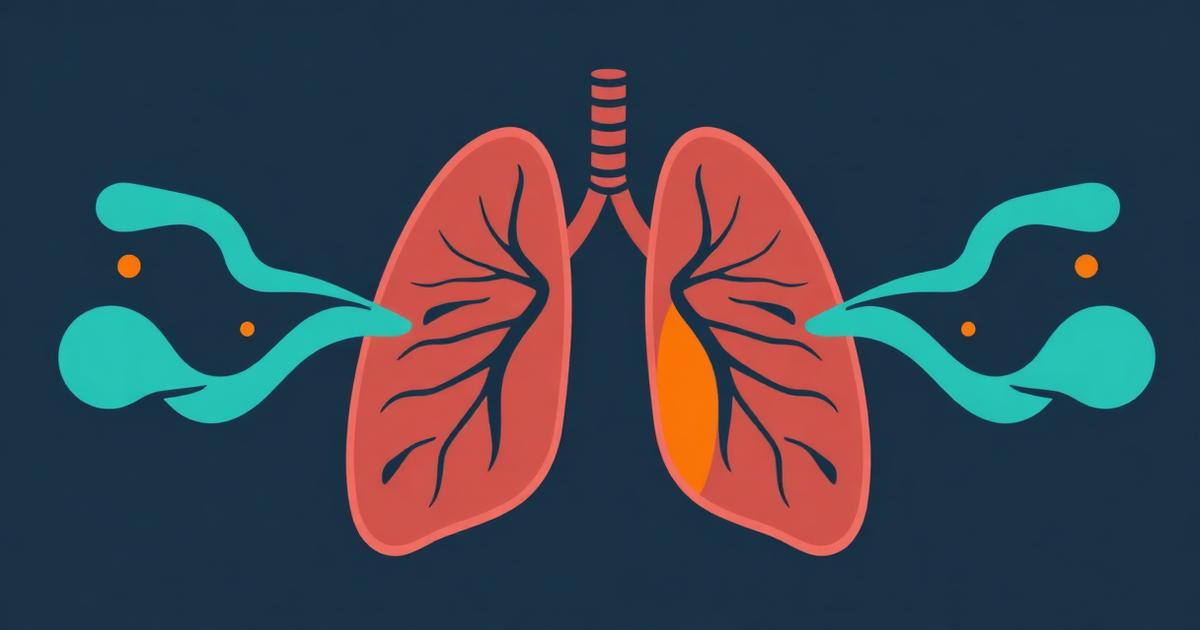
The lungs are the organ that took the direct hit from vaping, and they are also the organ that recovers fastest once the exposure stops. This is the honest week-by-week picture of what happens in your airways after your last puff, and where the evidence still has gaps.
Days 1-7: irritation clears
Propylene glycol and vegetable glycerin are respiratory irritants. Within the first days off vape aerosol, the acute inflammation in the throat and upper airway starts settling. Most quitters notice their throat feels less raw within 48-72 hours.
Coughing may briefly get worse in week one as the airway cilia — the microscopic sweepers lining your bronchi — resume clearing accumulated mucus. That "productive cough" is the airway working, not deteriorating.
Weeks 1-4: cough resolves
Chronic vape cough usually eases inside 1-2 weeks and is gone by week four for most quitters. If yours persists past 6-8 weeks, get it checked; a lingering cough can indicate infection, asthma the vape was masking, or (rarely) EVALI-related structural change.
Months 1-3: cilia and small airways
Cilia function — measured indirectly by mucociliary clearance rate — recovers over 1-3 months in smoking cessation studies. Vape-specific measurements suggest a similar trajectory. Small-airway reactivity, tested with methacholine challenge or IOS, improves noticeably by month three in most cases.
Practical marker: perceived exertion during the same walk or run drops by month two. If you re-test resting heart rate at the start of a walk and after a fixed distance, the delta usually shrinks.
Months 3-12: measurable function
FEV1 (forced expiratory volume in 1 second) and FVC (forced vital capacity) — the standard spirometry numbers — often improve modestly across the first year of abstinence. The gains are smaller than in smokers because most vapers were not losing as much function to begin with, but they are real.
If you have access to a pulmonologist, a baseline spirometry at quit and a follow-up at 6-12 months is a useful, motivating pair of data points.
Year 1 and beyond
Vape-specific decade-scale data is still emerging. What we have from smoking cessation is that lung-function decline slows to the age-normal rate within a few years of quitting. Vapers were exposed to a different constituent mix than smokers, so the trajectory may be better in absolute terms, but this remains an active research area.
The long-term-health pillar covers cross-system recovery; this article is the airways in isolation.
What can slow recovery
- Continued exposure to smoke — cigarette, cannabis, cooking smoke, wildfire.
- Untreated asthma or reflux. Both can present as post-quit cough.
- Immediate return to high-intensity exercise during peak withdrawal week — build up gradually.
- Dehydration. Cilia need moisture to move.
When to see a doctor
- Cough persisting past 6-8 weeks.
- Shortness of breath at rest or on light exertion.
- Chest pain, coughing blood, or unexplained weight loss.
- History of EVALI or diagnosed vaping-related lung injury.
Making it stick
Lung recovery is the most immediately visible dividend of quitting. If you want a marker to hold onto during the hard days of week one, the fact that your airways start clearing themselves within 48 hours is a real one. The rest of the long-term recovery timeline unfolds from there.