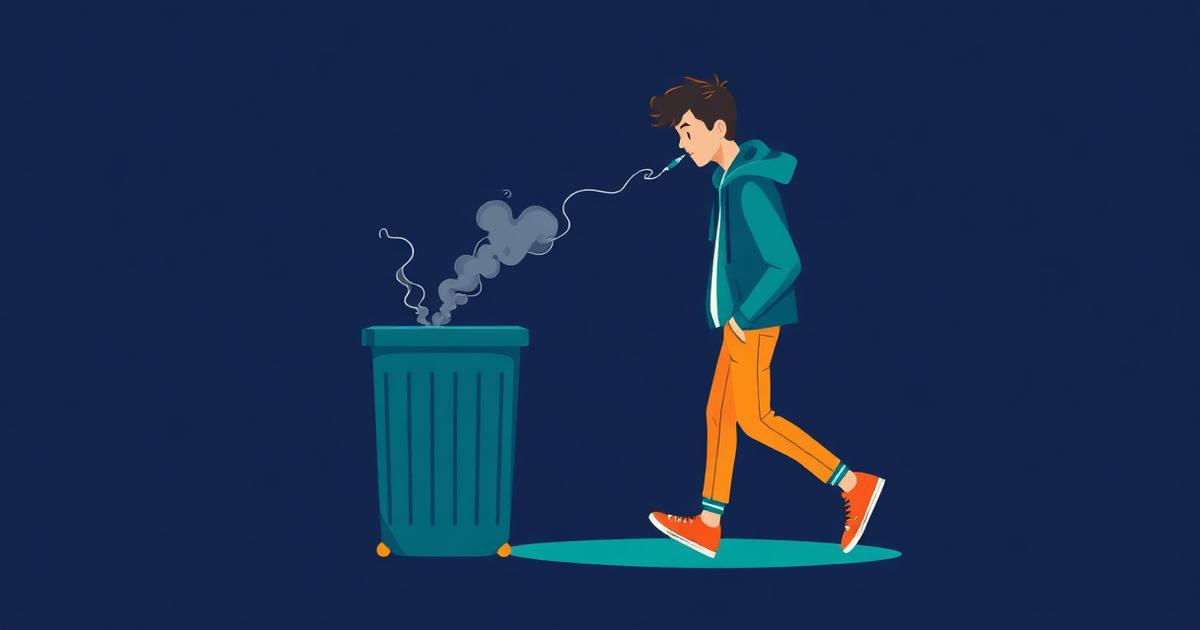
The most common thing teens say when they try to quit vaping is: "But it helps my anxiety." What actually helps the anxiety is the vape ending the last vape's withdrawal. That's the loop, and it's the problem.
The pharmacology of the loop
Every dose of nicotine causes a short-lived release of dopamine and mild sympathetic quieting. It genuinely feels calming for 5-10 minutes. Then plasma nicotine drops with a ~2-hour half-life. Somewhere around 60-90 minutes later, mild withdrawal surfaces as restlessness, irritability, and low-grade dread — a state indistinguishable from anxiety.
The next puff "treats" that state. The brain, being a good scientist, files this as "vaping treats anxiety." It doesn't. It treats the withdrawal from the last vape.
The data on adolescent vapers
Multiple population studies now show teen daily vapers have higher rates of:
- Generalised anxiety
- Depressive symptoms
- Self-reported stress
- Suicidal ideation
The direction of causation is partly bidirectional — anxious teens are more likely to start vaping — but the pattern that matters is that continuing to vape does not fix it, and quitting usually improves it.
What typically happens to mood after quit day
- Days 1-7. Worse. Irritability, sadness, restlessness. This is nicotine withdrawal, not the return of a hidden mood disorder.
- Days 8-14. Volatile. Some good hours, some bad hours. Sleep starts to help.
- Days 15-30. Clear improvement past your vaping baseline. Less generalised anxiety. Steadier mood.
- Months 2-3. Most teens describe feeling emotionally "flatter in a good way" — fewer highs and lows in a day.
When to bring in a clinician
Do not wait for the quit to fix everything. Book a pediatrician, school counsellor, or therapist if:
- Low mood, hopelessness, or loss of interest persists past week four
- Panic attacks are new or worsening
- Sleep is still badly disrupted at week four
- You had anxiety or depression before you started vaping
If you have any thought of suicide, that is a same-day call. 988 in the US (call or text). 111 in the UK. 13 11 14 in Australia (Lifeline).
What actually helps mood during the quit
- Breathing exercises. Longer exhale than inhale shifts the nervous system out of high alert.
- Sleep as a KPI. Aim for the same bedtime for 14 nights. Nicotine withdrawal sleep is bad; consistent sleep is what pulls mood back.
- Movement. Even a 15-minute walk moves the same neurotransmitters nicotine was fake-fixing.
- This Is Quitting. Randomised trial showed higher quit rates and lower distress. Free, teen-specific.
- Someone to talk to. One person who knows what you are doing.
For parents reading this
The mood dip in week one is real, predictable, and short. Do not interpret it as evidence that vaping was "medication" your teen needs back. See our parents' pillar for the conversation script.
The bottom line
Vaping is not treating your anxiety. It is treating the anxiety it created 90 minutes ago. Two to four weeks off nicotine is enough time to see what your baseline mood actually is — and for most teens, that baseline is calmer, not worse, than the vaping loop.